

Why mandate clarity, buyer readiness and co-developed operational readiness are decisive for European quantum sovereignty.
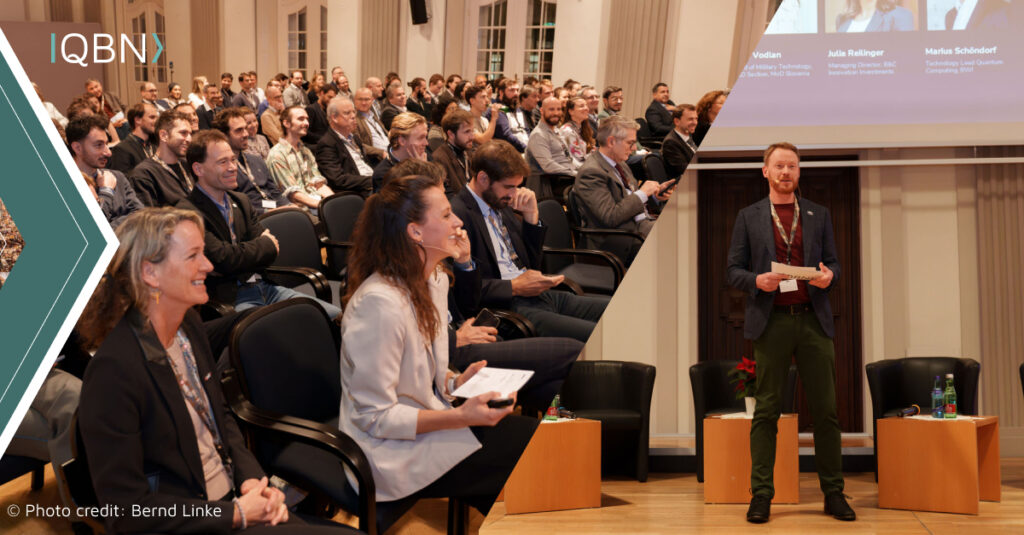
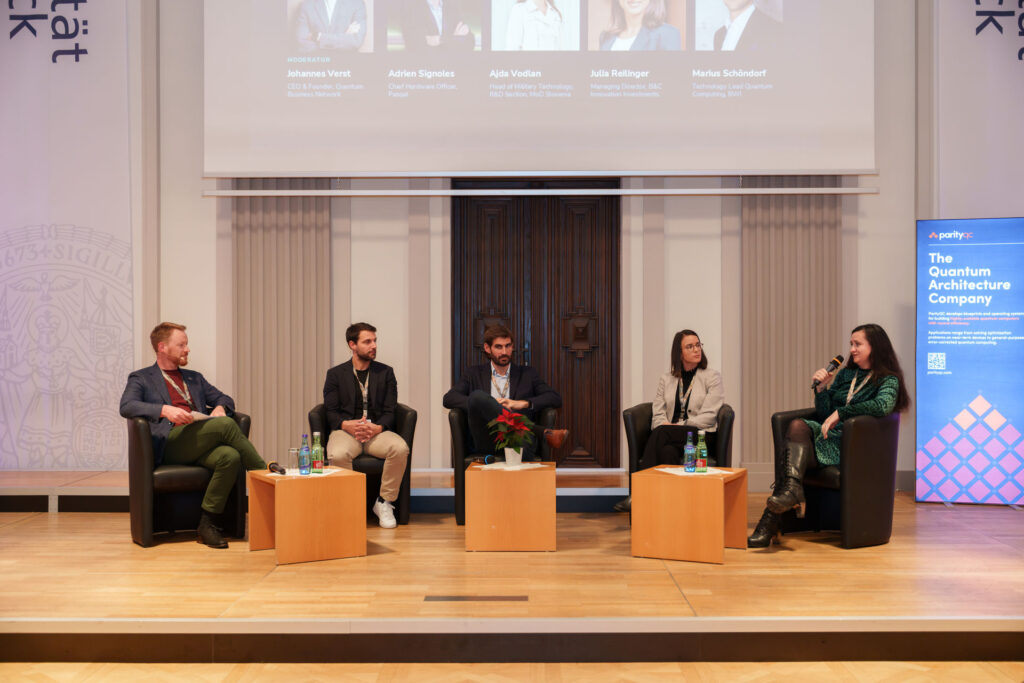
On 24 November 2026, QBN CEO & Founder Johannes Verst moderated the Thought Leadership Table From Quantum Act to Capability Building for the Future of Europe in Innsbruck as part of Quantum Computing as a Strategic Future Technology for Defence and Security.
Joining the panel were Adrien Signoles (Chief Hardware Officer, Pasqal), Ajda Vodlan (Head of Military Technology, Research and Development Section, Ministry of Defence of the Republic of Slovenia), Julia Reilinger (Managing Director, B&C Innovation Investments GmbH) and Dr. Marius Schöndorf (Technology Lead Quantum Computing, BWI GmbH & Co-Chair, QBN WG QDS).
Moving Beyond the Familiar Policy Script
Fault-tolerant quantum computing is emerging as a foundational pillar for both European industrial competitiveness and strategic autonomy. However, translating research leadership into deployable defence capabilities requires moving beyond generic calls for better coordination and more funding toward a clear division of labour across Brussels, Member States, prime contractors, quantum suppliers and private capital.
Spotlight: CoPaNA — The Sole Quantum Computing Project in the EDF 2025 Programme
A central anchor of the Innsbruck gathering was the public launch of CoPaNA (Concatenated Parity codes on Neutral Atoms). Selected under the European Defence Fund (EDF) 2025 call as the only quantum computing project in that programme, the three-year initiative demonstrates how European quantum scale-ups and defence primes can combine forces on fault-tolerant architectures:
- Consortium Leadership & QBN Member Collaboration: Coordinated by QBN member Pasqal alongside QBN member ParityQC and defence prime Thales (Thales Nederland), the project unites Europe’s neutral-atom hardware leadership with parity-based quantum error correction and defence systems expertise.
- Division of Roles: Pasqal leads neutral-atom quantum processing unit (QPU) hardware and experimental integration, ParityQC contributes quantum error-correcting codes and scalable architecture blueprints, and Thales defines defence-relevant use cases and resource requirements for future fault-tolerant systems.
- The Post-Grant Test Case: During the Thought Leadership Table, CoPaNA served as the concrete reference point for examining what must happen on Day 1 after a three-year R&D consortium concludes – specifically how to bridge the gap from scientific milestones to ruggedised, operationally deployable defence capabilities.
Four Core Insights from the Table
- Respecting Mandate Boundaries: Civil EU instruments – including the European Quantum Act and EuroHPC – are designed for Single Market cohesion and research and innovation, not national defence procurement. Clarity on where Brussels’ mandates end and where national Ministries of Defence, EQUAD and allied frameworks such as NATO DIANA and NATO Innovation Fund take over is essential to avoid institutional friction and misplaced expectations.
- Crossing the Post-Grant Cliff: Multi-year collaborative R&D programmes, such as the EDF’s CoPaNA project, advance technical milestones, yet a structural gap often opens on Day 1 after grant funding ends. Transitioning from lab demonstrations to ruggedised, sovereign hardware requires early industrial off-take pathways and sustained growth financing.
- Building Buyer Readiness & Agile Procurement: Quantum computing cannot be procured like conventional off-the-shelf IT via static specification sheets. Defence and critical infrastructure operators require technical literacy and flexible co-development frameworks capable of accommodating capex-heavy architectures still evolving toward fault tolerance.
- Aligning TRL and ORL: Developing Technology Readiness Levels without parallel progress on Operational Readiness Levels risks a multi-year capability gap – resulting in delayed procurement, operational exposure and supply-chain dependencies. Early, structured dialogue between buyers and suppliers is the prerequisite for operational adoption.
Next Steps with QBN
QBN continues to drive practical buyer–supplier alignment through the QBN Working Group Quantum Technologies for Defence & Security (WG QDS). Contact the QBN team to join WG QDS workstreams.
