

External Events Conference & Exhibition
QBN Events
All
Others
QBN Events
QBN Events Internal
QBN Forum
QBN Quantum Leadership Sessions
QBN Working Groups
WG Defence & Security
WG Diamond Quantum Technologies
WG Photonic Quantum Technologies
WG Quantum Communications and Cryptography
WG Quantum Computing & Applications
WG Quantum Computing and Simulation
WG Quantum Computing Software and Algorithms
WG Quantum Enabling Technologies
WG Quantum Sensing, Imaging and Metrology
External Events
All
Conference & Exhibition
QBN Member event
QBN Partner event
september
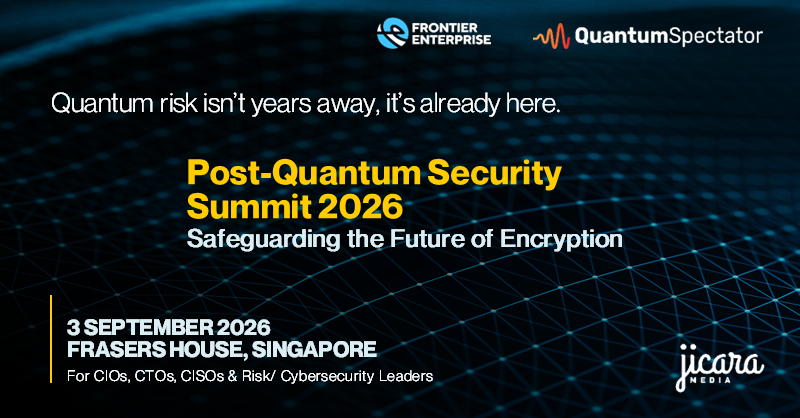
03Sep10:0017:00Post-Quantum Security Summit 2026
Time
10:00 am, 3 Sep 2026 - 17:00 pm, 3 Sep 2026(GMT+02:00) View in my time
Location
Frasers House, Singapore
Event Details
As Ecosystem Partner of the Post-Quantum Security Summit 2026, QBN APAC supports the exchange on a defining challenge facing enterprise security leaders: protecting data and infrastructure from quantum-enabled threats. Though
Event Details
As Ecosystem Partner of the Post-Quantum Security Summit 2026, QBN APAC supports the exchange on a defining challenge facing enterprise security leaders: protecting data and infrastructure from quantum-enabled threats. Though large-scale quantum computers are not yet operational, the risk to current public-key cryptography is widely acknowledged, driving the need for early planning and structured transition strategies.
The US National Institute of Standards and Technology (NIST) has issued recommendations on safeguarding against quantum threats, including algorithms safe for Post-Quantum Cryptography (PQC). Singapore’s IMDA & CSA have likewise published a handbook to guide organizations, and the issue has even reached parliament.
Beyond PQC, Quantum Key Distribution (QKD) is emerging as a complementary method for provably secure key exchange. Pilot networks in Asia and Europe highlight its potential for finance and government, while raising questions of interoperability, scalability, and integration with enterprise infrastructure — issues CIOs and CISOs must evaluate alongside PQC migration.
This pioneering end-user focused conference in Singapore brings together quantum security experts, policymakers, and strategists to explore the urgent transition to quantum-era security. Tailored for CIOs, CISOs, and senior IT executives, the program covers PQC, QKD, how quantum algorithms threaten RSA and ECC, the “harvest now, decrypt later” risk, and NIST’s global standardisation process.
The event clarifies what actions are necessary now, what can be deferred, and how organizations can structure a risk-based transition to quantum-resilient security. Attendees will gain insights into the evolving threat landscape, PQC timelines, ecosystem maturity, QKD developments, and operational implications of migration. Sessions will address cryptographic inventory, risk assessment, migration planning, governance, compliance, and vendor ecosystems.
QBN APAC Member Benefit: A limited number of All-Access Passes are available to QBN APAC members on a first come, first served basis. Contact us to secure yours.
To learn more and register: https://eventpages.jicaramedia.com/pqss2026?source=QBN
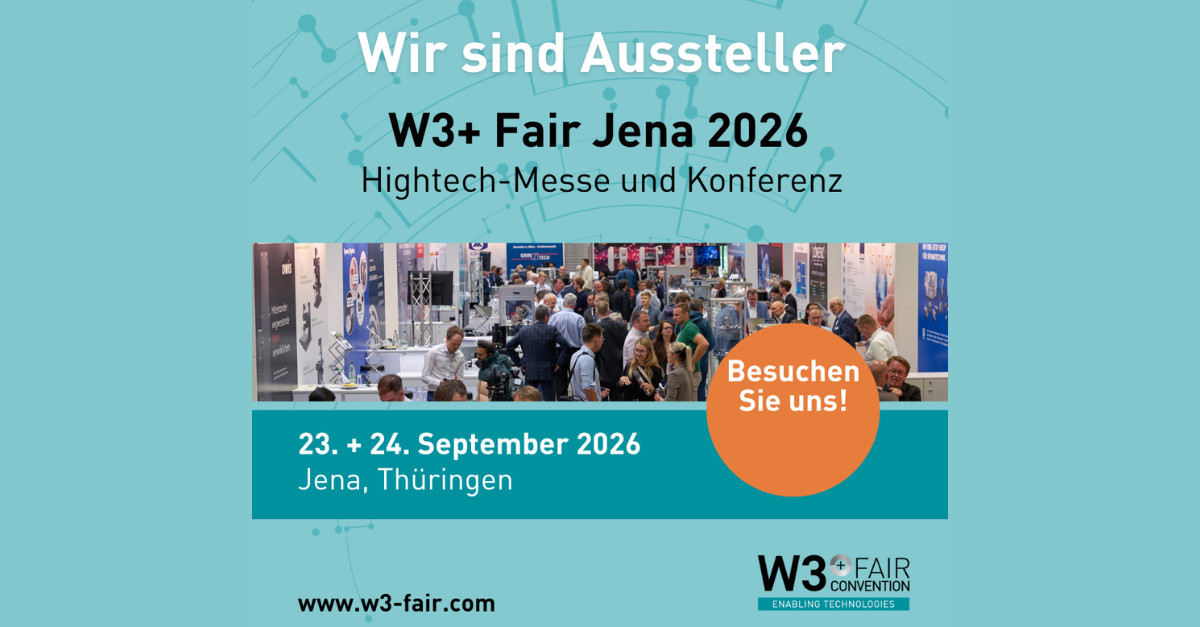
23Sep(Sep 23)09:3024(Sep 24)17:00W3+ Fair Jena 2026
Time
9:30 am, 23 Sep 2026 - 17:00 pm, 24 Sep 2026(GMT+02:00) View in my time
Event Details
The W3+ Fair Jena 2026 is the business platform for high-tech innovations, taking place on 23-24 September 2026 at the Sparkassen-Arena Jena. As the central networking and business platform
Event Details
The W3+ Fair Jena 2026 is the business platform for high-tech innovations, taking place on 23-24 September 2026 at the Sparkassen-Arena Jena.
As the central networking and business platform at the high-tech location of Jena, Thuringia, the event brings together professionals from the fields of photonics, optics, electronics and mechanics, as well as many relevant cross-cutting technologies. Its objective is to drive innovation for application markets including MedTech, Life Sciences, Space & Aerospace, Defence & Security, ICT, Semiconductors and more.
The accompanying conference programme, held in German, covers topics including:
- MedTech & Life Sciences
- Photonics & Semiconductors
- Aerospace
- Security & Defence
- Digitalisation & AI
- Coatings & Precision Engineering
The event will feature 250+ exhibitors and partners presenting the latest technologies and solutions, 60+ expert presentations with practical insights, and targeted matchmaking and networking opportunities with the high-tech community in Jena and Thuringia.
Event Language: German
QBN is pleased to support W3+ Fair Jena 2026 as a Bronze Partner.
QBN member benefits: A limited number of complimentary visitor tickets are available, together with access to the W3+ Fair networking events. Interested in attending? Contact us.
Register here: W3+ Fair Jena | 23+24 September 2026
